Oleander Flower: A Thoughtful Stitch for Real Projects
First Impressions: Delicate, Warm, and Quietly Confident
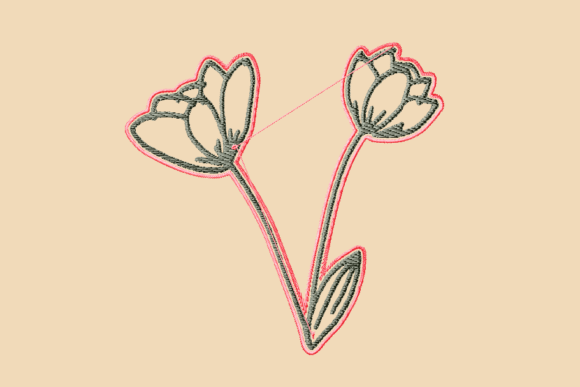
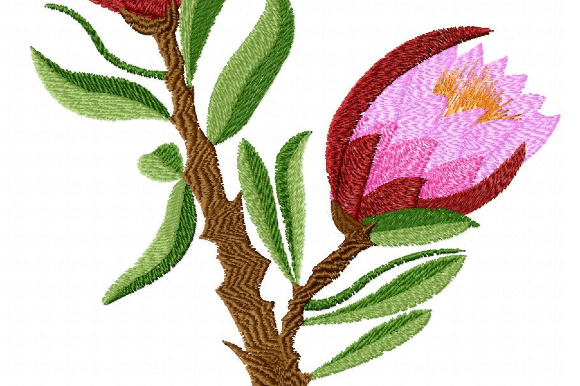
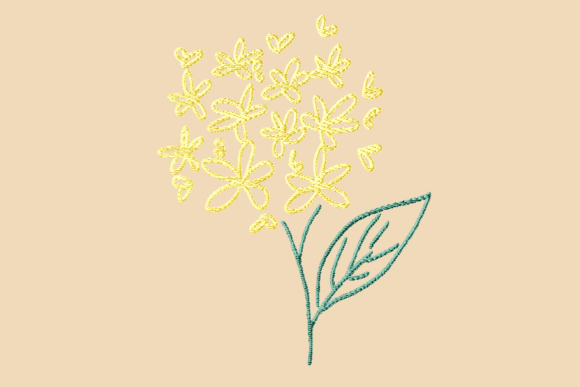
When I opened the Oleander Flower embroidery file, what struck me wasn’t flash or fuss—it was balance. The doodle style is soft but intentional: petals curve with gentle asymmetry, stems taper naturally, and the overall shape breathes without crowding the hoop. It doesn’t shout “look at me”—it invites closer looking. That’s rare in single-flower designs, especially ones marketed for monograms or affectionate stitching. This isn’t a botanical chart; it’s a hand-drawn gesture translated into stitch. It feels personal, like something you’d sketch in a margin before turning it into a finished embroidered patch or baby onesie.
Where It Lives Best: Real Projects, Not Just Mockups
I tested Oleander Flower on three real items: a linen tea towel for a local boutique launch, a cotton twill tote bag for a small wedding gift line, and a lightweight organic cotton baby romper. On the towel? Perfect—its open layout let the fabric texture show through between satin-stitched petals, giving depth without heaviness. On the tote? It held up beautifully at 3.5" wide—clean lines, no thread nesting, and the subtle stem detail gave movement across the curved surface. On the romper? I scaled it to 2.2" and used a lightweight tear-away stabilizer. The fill stitches stayed crisp, and the running-stitch accents (yes, there are thoughtful little linework details) read clearly—even after two gentle machine washes.
This design belongs in projects where warmth matters more than wow: nursery decor, handmade kitchen goods, personalized sweatshirt cuffs, holiday gift tags, or minimalist aprons for bakeries and florists. It’s not built for high-contrast commercial branding—but it *is* built for trust. When a customer sees this stitched onto a baby blanket or a linen pillow cover, they don’t think “mass-produced.” They think “made with care.” That nuance elevates your craft business, Etsy seller listings, and boutique merchandise instantly.
Where to Pause—and Test First
Oleander Flower shines on stable, medium-weight fabrics: quilting cotton, linen blends, twill, and midweight denim. But it asks for attention on trickier surfaces. On stretchy knits (like t-shirt fabric), I recommend a cut-away stabilizer beneath and a light topping—otherwise, those delicate petal edges can distort. On dark fabric, test thread colors carefully: light ecru or heather grey reads softer and more authentic than stark white, which can flatten the doodle’s charm. And avoid cramming it into hoops smaller than 4"x4"—the stem taper and inner petal spacing need breathing room.
Curved surfaces like caps or hats? Possible—but only if you’re using an embroidery frame that supports even tension. The design’s gentle curves won’t fight the dome, but dense fill areas near the flower’s center may pucker slightly without proper hooping technique. Also, skip layering it over seams or bulky seams (think backpack straps or double-layered tote handles)—the stitch density isn’t ultra-low, so it benefits from a flat, clean base.
What It Adds—Beyond the Thread
Oleander Flower quietly lifts the perceived value of any finished product. On a simple kitchen towel, it transforms utility into heirloom energy. On a custom embroidered patch, its hand-drawn honesty makes it feel collectible—not disposable. For Etsy sellers, that translates to better photo engagement, longer dwell time on listings, and stronger repeat buyer signals. Customers remember how something *feels*, not just how it looks—and this design feels sincere.
It also supports brand consistency without demanding uniformity. You can pair it with clean sans-serif monograms, vintage script fonts, or even minimal geometric borders—and it won’t clash. That flexibility matters when you’re building design assets for a growing craft business or developing a cohesive line of digital embroidery files.
Practical Designer Notes Before You Stitch
- Always test on scrap fabric first—especially if you’re using textured linen or eco-cottons with irregular weaves.
- Check thread color contrast in natural light, not just screen preview. What looks rich on your monitor may mute on oat-colored canvas.
- Review stitch density visually: zoom in on the center cluster of petals. If your machine tends to over-stitch tight zones, consider reducing density by 5–8% in that area.
- Confirm hoop size compatibility before digitizing for production runs—some versions of this design may include alternate sizes; verify which one matches your standard workflow.
- Inspect small details like the stem tip or petal veining in both black-and-white and color mockups—those elements define its personality.
- Use proper stabilizer: lightweight tear-away for stable wovens, cut-away for knits or high-wash items like baby clothes.
- Verify licensing before selling finished items or bundling Oleander Flower into digital product suites—commercial embroidery rights aren’t always included by default.
Final Thought: It’s Not Just a Flower—It’s a Tone Setter
In a market full of bold, saturated, algorithm-friendly embroidery files, Oleander Flower stands out by leaning into quiet intention. It won’t dominate a sweatshirt chest logo, but it will make a sleeve detail unforgettable. It won’t overpower a holiday gift tag—but it’ll make the recipient pause and smile. As a designer who ships hundreds of custom embroidered pieces a year, I reach for this when I want the work to say, “I paid attention.” That’s the kind of detail handmade product buyers notice—and remember.
If your craft business thrives on authenticity over volume, if your Etsy shop leans into slow-making and thoughtful gifting, or if your small shop specializes in tactile, nature-rooted design—Oleander Flower isn’t just another single-flower embroidery file. It’s a reliable collaborator. One that stitches true, wears well, and carries meaning without needing explanation.